Public Speaking for Professionals: Expert Strategies
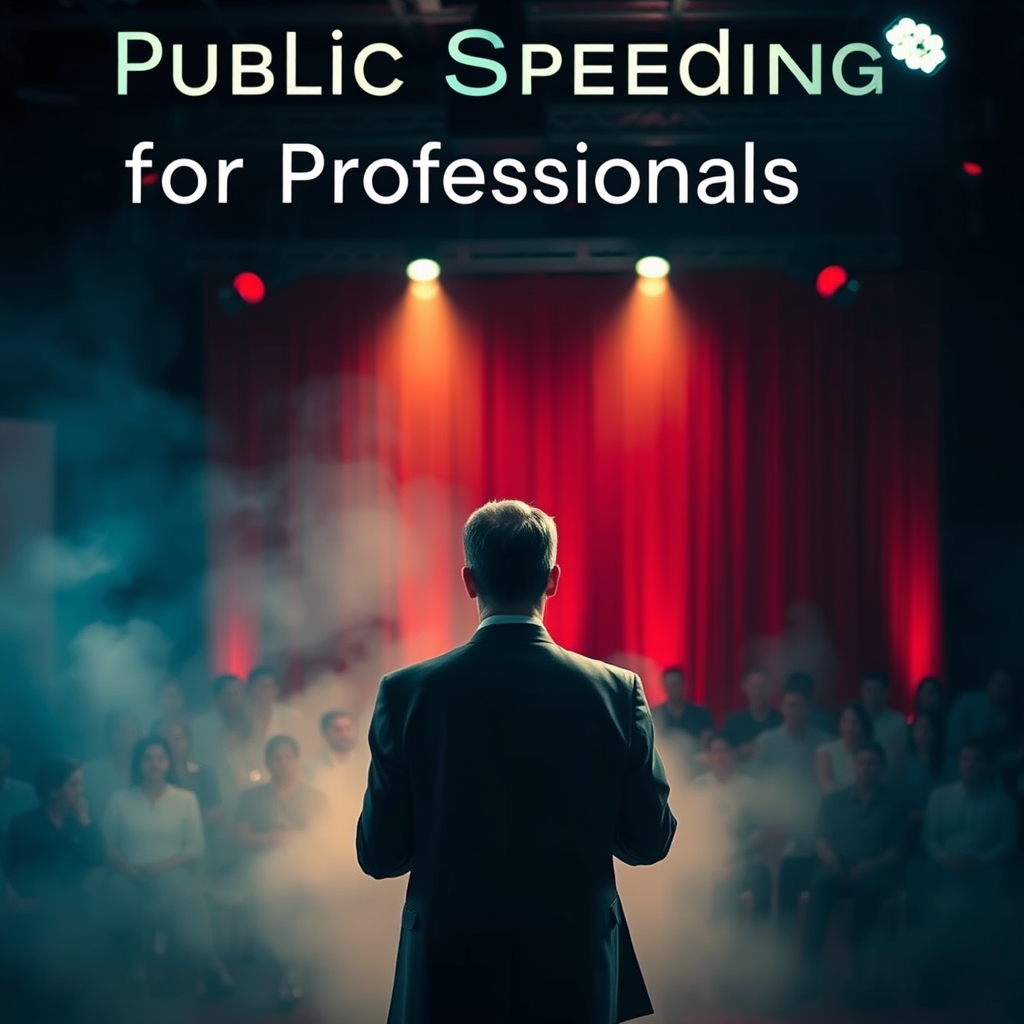
⚡ Quick Answer
Effective public speaking for professionals involves mastering the psychology of command, manipulating attention, trust, and memory to deliver transformative performances. By structuring talks, projecting voice, and harnessing energy, professionals can turn a room of individuals into a unified field of attention, distinguishing themselves as leaders and visionaries.
🎯 Key Takeaways
- The Psychology of Command - Mastering the conscious manipulation of attention, trust, and memory to deliver transformative performances.
- The Congruence Mandate - Creating a congruent symphony across verbal, vocal, and non-verbal channels to avoid misalignment and perceived inauthenticity.
- Non-Verbal Command - Using spatial marking, micro-expression deployment, and other techniques to build a parallel narrative and engage the audience.
The Speaker’s Edge: The Psychology of Command
You can structure a talk and project your voice. The plateau you face isn’t skill—it’s impact. The gap between proficient and transformative performance is the conscious manipulation of attention, trust, and memory. This is about speaking with consequence.
The Professional’s Arena
Your challenge is no longer anxiety, but alchemy: turning a room of individuals into a unified field of attention. In the professional sphere, advanced speaking is the ultimate leverage point. It distinguishes a manager from a leader, an expert from a visionary.
Forget calming your nerves. Harness that energy as a current to be directed. We focus on the architecture of influence.
The Congruence Mandate
The Mehrabian model (55/38/7) is misused. It measures the communication of feelings and attitudes when channels conflict. The insight for masters: your power lies in creating a congruent symphony across all three channels. A misalignment is what an audience senses as “inauthenticity.”
1. Non-Verbal Command: The Parallel Narrative
Your body tells its own story.
- Spatial Marking: Assign conceptual “spaces” on stage. Use one spot for past challenges, another for future vision, a central position for core assertions. This physical mapping builds a cognitive scaffold for your audience.
- Micro-Expression Deployment: Suppress nothing. A slight furrow before a key revelation signals genuine thought. A shared glance with an audience member creates connection. Use these fleeting expressions to show real-time processing, not recitation.
- Asymmetric Eye Contact: Stop sweeping the room. Hold one person’s gaze long enough to complete a full thought. You’re building individual alliances, not addressing a monolith.
2. Vocal Prosody: The Music of Meaning
Monotony murders advanced ideas.
- Strategic Pauses: Silence is your most powerful punctuation. A full beat before a paradigm-shifting statement creates anticipation. A beat after lets it resonate. This is where integration happens.
- Pacing as Respect: Complex data? Slow down. An evocative story? Let rhythm take over. Match speed to cognitive load.
- Tonal Anchoring: Lower pitch for gravity. Use a deliberate, softer tone to draw listeners in. These are choices, not habits.
3. Verbal Precision: The 7% That Bears 100% of the Logic
At this level, every word must pull weight.
- Inclusive Language as Leverage: Confident speakers use 9% more “we” and “us.” Replace “you should” with “we can.” This transforms a presentation into a collaboration.
- Metaphor as Cognitive Shortcut: Don’t explain a complex system; call it an ecosystem, a symphony, a city. Steve Jobs didn’t introduce a phone; he unveiled “an iPod, a phone, and an internet communicator”—three familiar metaphors fused into one new idea.
- Rhetorical Momentum: Use anaphora (repetition at the start of clauses) for rhythmic power, like Martin Luther King Jr.’s “I have a dream.” Use tricolon (ideas in threes) for satisfying completeness.
The Mechanics of Audience Alchemy
Manipulating psychological state—ethically—is the advanced craft.
- Priming the Palette: Your opening story sets the emotional lens. Begin with frustration to prime for your solution. Start with wonder to open minds to innovation. You’re framing the entire talk.
- Strategic Vulnerability: A slight, self-corrected stumble. A genuine, “Let me think of the best way to put this.” This calculated imperfection dismantles the power differential, making your expertise more palatable.
- Create “Us vs. The Problem”: Never be the sage enlightening the ignorant. Be the guide on a shared journey to conquer a challenge. This is the engine behind inclusive language.
Contrarian Truths
- Your Slides Are Your Adversary. The more sophisticated the slide, the more it competes for cognitive bandwidth. Use them only to show, not tell. A single powerful image beats a bullet-point list you’ll just read.
- Practice to Fluency, Not Memorization. Mastery is when you’ve internalized the architecture so thoroughly you can deliver it through any technical glitch or interruption.
- The Q&A Is the Real Speech. The presentation proves your expertise; the Q&A proves your character. Anticipate the five hardest questions. This is where intellectual agility is displayed.
Deconstructing a Master: Jobs’ iPhone Launch (2007)
- Psychology: Primed by the “Apple as innovator” narrative. The lone figure on a vast stage.
- Structure: Problem-Solution. “Smartphones are not smart. They are complicated.” (Problem) “We are going to reinvent the phone.” (Promise)
- Technique: The legendary pause before “Today, Apple is going to reinvent the phone.” Asymmetric eye contact. The embraced imperfection: “It works like magic… Wow!”—seemingly spontaneous wonder.
- Verbal Alchemy: The tricolon: “An iPod, a phone, an internet communicator.” He sold the metaphor, not the machinery.
The Master’s Brief
For your next talk, start with these questions:
- What is the single, transformative thought I want implanted?
- What emotional journey is required to embrace it?
- What strategic “imperfection” will accelerate trust?
Record your next presentation. Analyze it for congruence, priming, and the use of silence. Deconstruct a great speech not for its words, but for its psychological blueprint.
The platform is a laboratory of human influence. You have the controls. Now, experiment with the chemistry. The goal is no longer applause, but change.
Related Resources
❓ Frequently Asked Questions
Q1: What is the key to effective public speaking for professionals?
A: The key to effective public speaking for professionals is mastering the psychology of command, which involves manipulating attention, trust, and memory to deliver transformative performances.
Q2: How can professionals overcome anxiety and deliver impactful speeches?
A: Professionals can overcome anxiety by harnessing their energy as a current to be directed, focusing on the architecture of influence, and creating a congruent symphony across all three channels of communication.